FloPlanner · Guides
Air vs sea: when to fly part of an order
Sea freight is cheap and slow. When the next sea shipment lands after a product runs out, sending part of the same order by air can keep it in stock. The question is how much to fly, and whether the lost sales are worth more than the extra freight.
The short answer
Fly only the gap: the units you'd sell between the week you run out and the week the sea shipment lands, plus a small buffer. Ship the rest by sea. Then compare the extra air freight with the margin on the sales you'd otherwise lose.
1. Find the gap
Roll stock forward week by week. If the product runs out before the sea shipment lands, the weeks in between are the gap, and the forecast sales in those weeks are the units at risk.
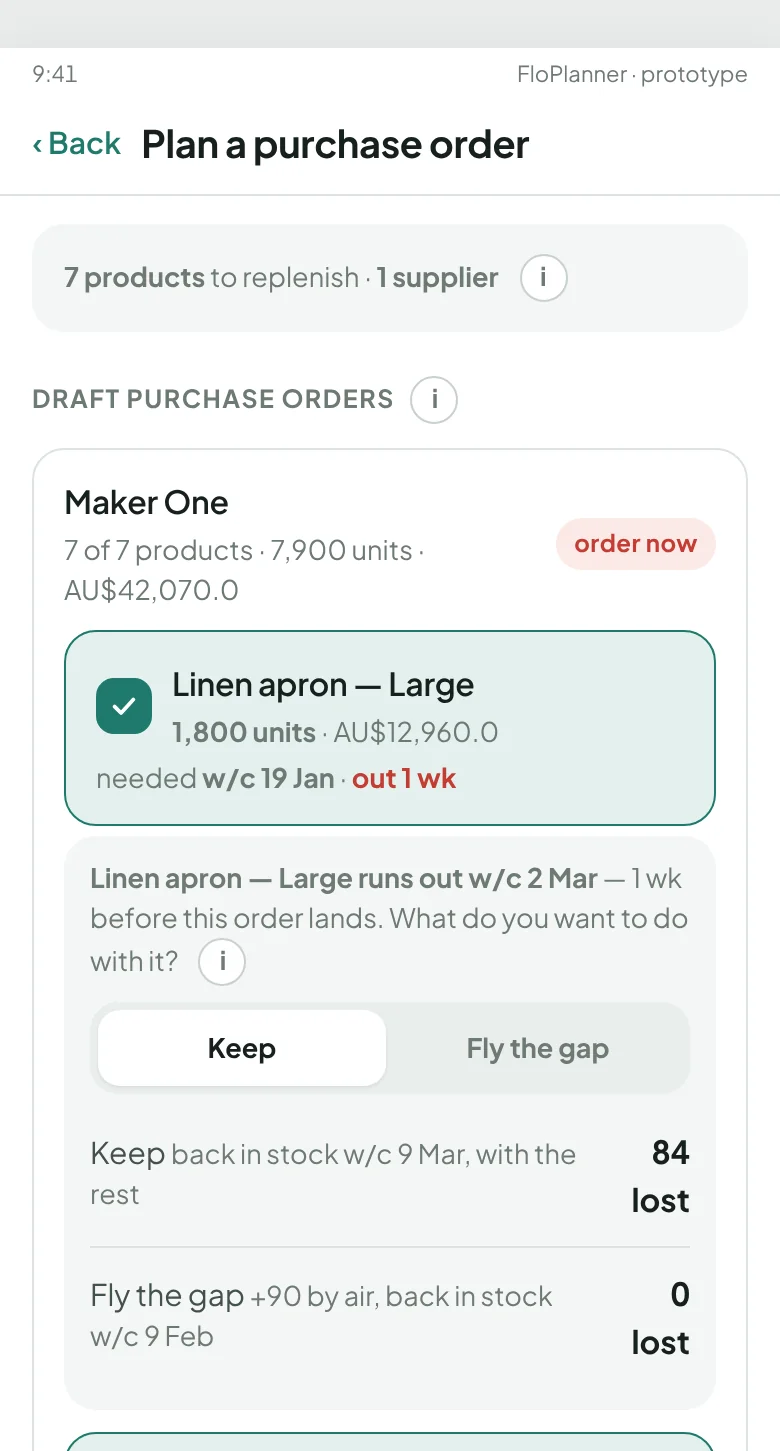
2. Split the order
Ask the supplier to split the purchase order into two shipments: a small one by air for the gap, and the rest by sea. Each shipment gets its own arrival date, and each is received separately when it lands.
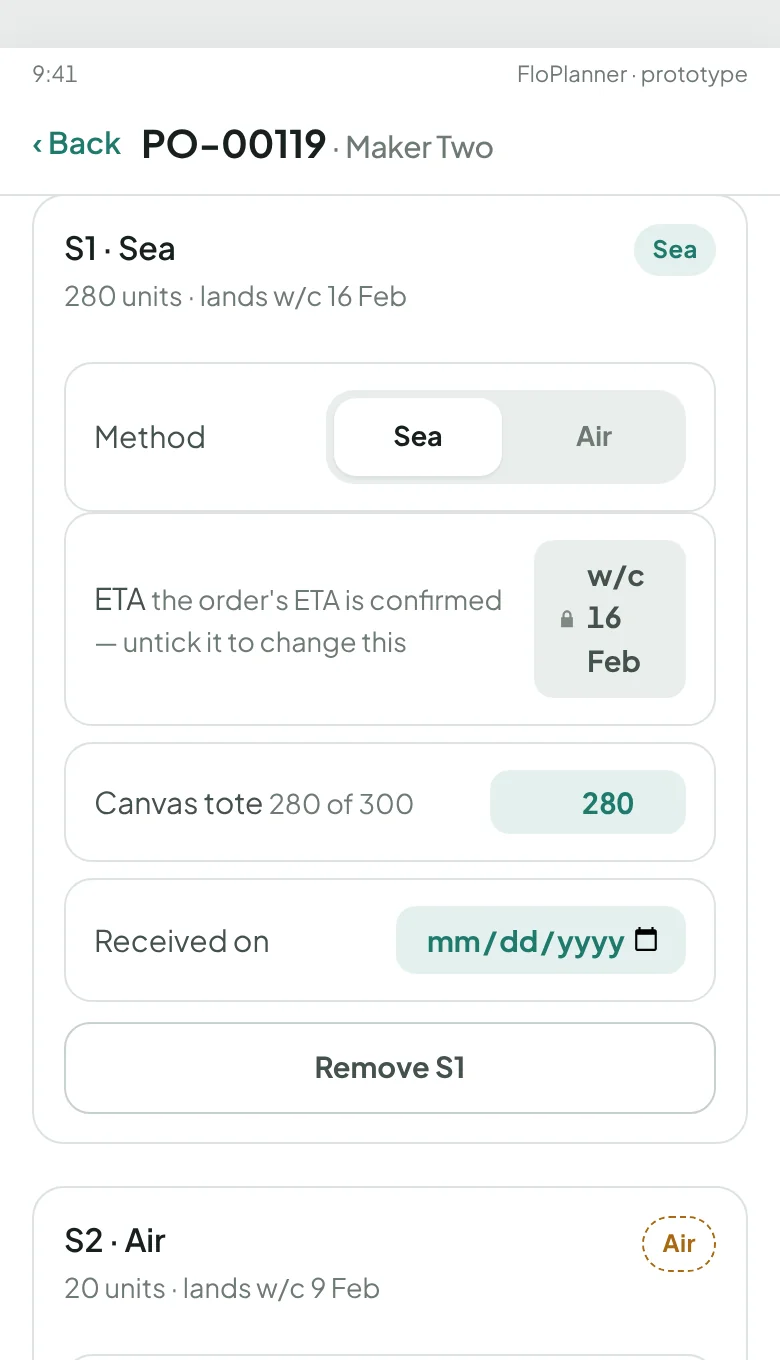
3. Check the cost
Air freight usually costs several times more per unit than sea. It's worth it when the margin on the sales you'd lose, and the cost of disappointed customers, is greater than the extra freight. For a small number of high-margin units it often is; for bulky, low-margin products it often isn't.
4. Keep the paperwork straight
A split order can mean two invoices and two delivery dates. Record each shipment's arrival and invoice date, so deposits, balances and stock all line up.
Better still: order earlier
Flying is a fix, not a plan. A weekly forecast that shows the gap months ahead gives you time to order by sea instead.
Air vs sea is part of FloPlanner Advanced Plus. See reorder planning and the stock gap analysis.
FloPlanner is in early access through November and December 2026. Advanced launches in January 2027 on any phone or computer.
Request early access →